











































China Semiconductor Localization Accelerates Across Supply Chain
What Happened
China’s semiconductor localization drive has accelerated sharply in 2026, with domestic chip makers rapidly replacing foreign suppliers across every segment of the supply chain. From electronic design automation (EDA) tools to advanced manufacturing equipment, memory chips, and packaging technologies, Chinese companies are closing gaps that once seemed insurmountable.
The acceleration is driven by a convergence of factors: sustained government funding through the Big Fund III, tightening US export controls that have made foreign supply unreliable, and genuine technological breakthroughs by firms like SMIC, CXMT, YMTC, and Huawei’s HiSilicon. China is now on track to achieve meaningful self-sufficiency across multiple semiconductor segments well before its 2030 target of 70% domestic chip supply.
SMIC’s ability to produce 7nm-class chips without EUV lithography—using multi-patterning DUV techniques—has stunned industry observers. CXMT’s successful IPO signals Wall Street-level confidence in China’s DRAM ambitions. And Huawei’s Kirin processors continue to demonstrate that Chinese chip design capabilities are competitive at the leading edge, even without access to TSMC’s most advanced nodes.
Key Developments
EDA Tools: Domestic EDA vendors Empyrean Technology and Xpeedic have made significant inroads into the Chinese market, replacing Synopsys and Cadence in analog, RF, and packaging design flows. While digital design EDA remains dominated by US firms, China’s self-sufficiency in EDA has risen from near-zero in 2020 to approximately 10% in 2024, with a 30% target by 2030.
Lithography: Shanghai Micro Electronics Equipment (SMEE) continues to develop DUV lithography systems, though it remains far behind ASML’s EUV technology. China’s lithography self-sufficiency sits at roughly 5%, but SMEE’s progress on 28nm-capable systems represents a critical milestone for mature-node independence.
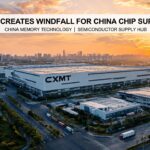
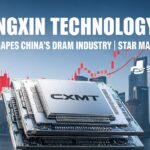
Memory: CXMT (ChangXin Memory Technologies) has received approval for its IPO, raising capital to scale DRAM production. YMTC continues to advance its 232-layer NAND flash technology. Together, these firms are positioning China to capture meaningful share in the global memory market, which has long been dominated by Samsung, SK Hynix, and Micron.
Foundry: SMIC and Hua Hong Semiconductor have expanded capacity aggressively. SMIC’s 7nm process, while not matching TSMC’s yield or performance, has proven commercially viable for Huawei’s mobile processors. Combined foundry self-sufficiency has reached approximately 15%.
Equipment: Naura Technology and AMEC (Advanced Micro-Fabrication Equipment) are gaining market share in etching, deposition, and cleaning equipment. These companies are benefiting from mandatory domestic procurement preferences and the inability of foreign equipment makers to service Chinese fabs under export control restrictions.
China Semiconductor Localization Progress
| Segment | Chinese Companies | Global Leaders | China Self-Sufficiency 2024 | Target 2030 |
|---|---|---|---|---|
| EDA Tools | Empyrean, Xpeedic | Synopsys, Cadence | ~10% | 30% |
| Lithography | SMEE | ASML | ~5% | 15% |
| DRAM | CXMT | Samsung, SK Hynix | ~5% | 25% |
| NAND Flash | YMTC | Samsung, Kioxia | ~10% | 30% |
| Foundry | SMIC, Hua Hong | TSMC, Samsung | ~15% | 35% |
| Packaging | JCET, Tongfu | ASE, Amkor | ~25% | 50% |
Why It Matters
China’s semiconductor localization push is reshaping the global technology landscape in fundamental ways. The country consumes over 30% of the world’s semiconductors but has historically produced only a fraction of that domestically. Closing this gap has become a top national priority, with implications for global supply chains, pricing, and geopolitical power dynamics.
The US export controls imposed since 2022—restricting advanced chips, manufacturing equipment, and EDA tools—have paradoxically accelerated China’s localization efforts. Rather than crippling Chinese semiconductor development, the restrictions have created urgent demand signals that have mobilized billions in government and private capital toward domestic alternatives. Every denied ASML EUV tool or restricted Nvidia GPU order has reinforced Beijing’s determination to build a self-sufficient semiconductor ecosystem.
For global chip companies, the implications are significant. Companies like Applied Materials, Lam Research, and KLA face permanent market share loss in China. Memory giants Samsung and SK Hynix must contend with emerging Chinese competition. And EDA firms Synopsys and Cadence are seeing their Chinese revenues erode as domestic alternatives mature.
China Industry Impact
Within China, the localization drive is catalyzing an entire ecosystem of suppliers, startups, and research institutions. The semiconductor workforce has expanded dramatically, with government-funded training programs producing tens of thousands of engineers annually. University semiconductor programs have seen record enrollment, and returning overseas talent—many displaced by US security reviews—has provided experienced leadership for domestic firms.
The Big Fund III, China’s latest semiconductor investment vehicle, has directed capital toward previously undersupplied segments including specialty gases, photomasks, and advanced substrates. This holistic approach—addressing not just headline technologies but the supporting supply chain—represents a maturation of China’s industrial policy strategy.
Domestic demand from Huawei, Xiaomi, BYD, and other Chinese tech leaders provides a captive market for emerging chip makers. Huawei’s willingness to use SMIC’s 7nm process despite lower yields demonstrates the strategic patience embedded in China’s localization approach—accepting short-term cost penalties for long-term independence.
Supply Chain Implications
Global semiconductor supply chains are bifurcating along geopolitical lines. Companies now maintain dual supply chains—one for China-served markets and one for the rest of the world. This duplication increases costs but reduces geopolitical risk for both sides.
Equipment makers face the most acute disruption. Naura and AMEC are winning orders that would have gone to Applied Materials or Tokyo Electron just three years ago. As Chinese fabs expand using domestic equipment, these firms gain the production experience needed to close the technology gap—a virtuous cycle that becomes self-reinforcing.
In packaging and test, China is closest to parity. JCET and Tongfu already serve major global customers and are leaders in advanced packaging techniques like chiplet integration and 2.5D/3D packaging. This segment represents China’s strongest position in the semiconductor value chain.
For multinational corporations operating in China, the localization trend creates both risks and opportunities. Companies that establish partnerships with domestic suppliers early may secure preferential access to the world’s largest semiconductor market. Those that resist localization may find themselves locked out as procurement preferences tighten.
CII Analysis
Market Signal Assessment:
Bull Case (55% probability): China achieves 70% semiconductor self-sufficiency by 2030. Continued government investment, technology breakthroughs in lithography and EDA, and a massive domestic market create a self-sustaining ecosystem. Chinese firms begin exporting chips and equipment, challenging incumbents globally.
Base Case (30% probability): Progress continues but advanced chips (sub-5nm) remain dependent on foreign technology. China achieves 40-50% overall self-sufficiency by 2030, with strong positions in mature nodes, memory, and packaging but persistent gaps in leading-edge logic and EUV lithography.
Bear Case (15% probability): Technology gaps prove more persistent than expected. Yield issues limit SMIC’s 7nm economics. Memory quality fails to match global standards. Tightened multilateral export controls (including Japanese and Dutch alignment with US restrictions) constrain equipment access. Self-sufficiency plateaus at 30-35%.
The most likely trajectory is a hybrid: China will achieve strong self-sufficiency in mature nodes (28nm and above), memory, and packaging within the next 3-4 years, while remaining dependent on foreign technology for leading-edge logic chips. This bifurcated outcome will create a two-tier global semiconductor market—one tier driven by cutting-edge performance (US, Taiwan, South Korea) and another driven by cost-effective production of mature technologies (China).
Investors should watch three leading indicators: SMIC’s 7nm yield improvements, CXMT’s DRAM quality metrics post-IPO, and SMEE’s lithography roadmap announcements. Progress on these fronts would shift probability toward the bull case.
For deeper analysis of China’s semiconductor ecosystem, see our China Semiconductor Ecosystem pillar page.
Sources
- TrendForce Semiconductor Research, 2026
- China Semiconductor Industry Association (CSIA) Annual Report
- IC Insights China Market Tracker
- US Department of Commerce Bureau of Industry and Security, Export Control Updates
- SMIC Financial Filings and Technology Disclosures
- CXMT IPO Prospectus, Shanghai Stock Exchange
- China Ministry of Industry and Information Technology (MIIT), Semiconductor Policy Documents