
















































China Mandates 10000 Humanoid Robots in Commercial Use by End of 2026
What Happened
China’s Ministry of Industry and Information Technology (MIIT) and the State-owned Assets Supervision and Administration Commission (SASAC) have jointly issued a national mandate to deploy 10,000 humanoid robots into commercial use by the end of 2026. The directive, announced on June 10, 2026, targets over 100 high-value application scenarios across manufacturing, healthcare, logistics, and elderly care, positioning China as the global leader in humanoid robotics deployment.
The plan introduces the concept of “Humanoid Robot-as-a-Service” (HRaaS), a subscription-based model that allows businesses to lease humanoid robots rather than purchase them outright, dramatically lowering adoption barriers for small and medium enterprises.
Key Developments
10,000 Robots in 100+ Scenarios
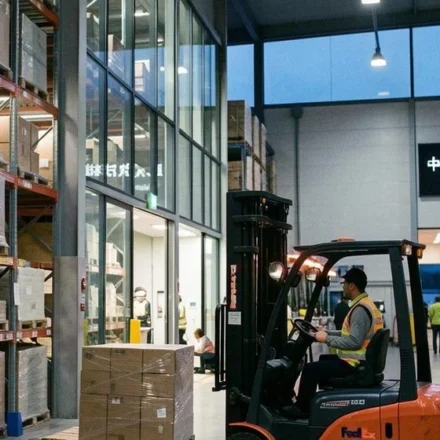
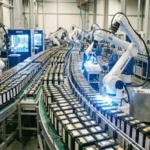
The MIIT-SASAC directive sets specific deployment targets: 10,000 humanoid robots must be in commercial operation by December 31, 2026. The robots will be deployed across more than 100 validated application scenarios, including automotive assembly lines, electronics manufacturing, hospital logistics, warehouse operations, and elderly care facilities. The plan prioritizes “dangerous, repetitive, and dirty” tasks that are difficult to fill with human workers.
Humanoid Robot-as-a-Service (HRaaS)
To accelerate adoption, the plan introduces the HRaaS model, where manufacturers lease robots to end-users at monthly rates starting from 5,000-8,000 yuan ($700-1,100). This model eliminates the upfront capital expenditure barrier and allows businesses to scale their robot workforce based on demand. Major robot manufacturers including UBTECH, Galbot, and Kepler have already announced HRaaS programs.
National Standards and Certification
MIIT will establish national standards for humanoid robot safety, performance, and interoperability by Q3 2026. A certification system will ensure that only robots meeting these standards can be deployed in commercial settings. The standards cover motion safety, human-robot interaction, data privacy, and cybersecurity.
| Metric | Target | Timeline | Key Sectors |
|---|---|---|---|
| Robot Deployment | 10,000 units | End of 2026 | Manufacturing, Healthcare, Logistics |
| Application Scenarios | 100+ | End of 2026 | Assembly, Hospital, Warehouse, Elderly Care |
| HRaaS Monthly Rate | 5,000-8,000 yuan | Q3 2026 | SMEs, Startups |
| National Standards | Safety + Performance | Q3 2026 | All Commercial Robots |
| Domestic Content | 70%+ | 2027 | Core Components, Software |
Why It Matters
This is the most aggressive humanoid robot deployment plan in history. While the United States, Japan, and South Korea have all announced humanoid robot initiatives, none have set specific deployment targets with mandatory timelines. China’s plan creates immediate demand for 10,000 units, which will drive down costs through economies of scale and accelerate the development of the humanoid robot supply chain.
The HRaaS model is particularly significant. By converting capital expenditure into operational expenditure, it makes humanoid robots accessible to small and medium enterprises that previously couldn’t afford them. This could trigger a wave of adoption that far exceeds the 10,000-unit target.
For the global robotics industry, this plan signals that humanoid robots are transitioning from research prototypes to commercial products. Companies that establish early market presence in China will have a significant advantage as other countries follow with their own deployment programs.
China Industry Impact
UBTECH Robotics (9880.HK)
UBTECH is the leading Chinese humanoid robot manufacturer, with its Walker series already deployed in automotive and electronics factories. The company has announced plans to deliver 5,000 humanoid robots by end-2026, targeting 50% of the MIIT mandate. UBTECH’s HRaaS program offers monthly leases starting at 6,000 yuan, making it the most affordable option for SMEs.
Galbot (Galaxy Bot)
Galbot, a Beijing-based startup, has developed the Galbot G1 humanoid robot for warehouse logistics. The company has secured orders from JD.com and SF Express for 2,000 units, with deliveries starting in Q3 2026. Galbot’s robots can handle packages up to 25kg and operate 20 hours per day.
Kepler Robot
Kepler Robot specializes in humanoid robots for elderly care. The company’s K1 robot can assist with mobility, medication reminders, and basic nursing tasks. Kepler has signed contracts with 50 elderly care facilities across China, with plans to deploy 1,000 units by end-2026.
Tesla Optimus
Tesla’s Optimus humanoid robot is also targeting the Chinese market. Tesla’s Shanghai Gigafactory has begun pilot production of Optimus units for internal use, with plans to expand to external customers in 2027. However, Tesla faces stiff competition from domestic manufacturers who offer lower prices and localized service.
Supply Chain Implications
Upstream: Core Components
The 10,000-unit deployment target creates immediate demand for core humanoid robot components: servo motors, reducers, sensors, and controllers. Chinese manufacturers like Leaderdrive (谐波减速器), Inovance (伺服电机), and RoboSense (LiDAR sensors) are ramping up production to meet the expected demand surge.
Midstream: Software and AI
Humanoid robots require sophisticated AI for perception, planning, and control. Chinese AI companies including Horizon Robotics, Megvii, and SenseTime are developing specialized robot AI platforms. The national standards will drive interoperability, allowing robots from different manufacturers to share software and data.
Downstream: Integration and Services
The HRaaS model creates a new service industry around humanoid robot deployment, maintenance, and training. System integrators like Siasun and EFORT are expanding their capabilities to support humanoid robot installations. The market for robot maintenance and training services is projected to reach 50 billion yuan by 2028.
CII Analysis
Our Take: China’s 10,000 humanoid robot deployment mandate is a watershed moment for the global robotics industry. The combination of specific targets, mandatory timelines, and the innovative HRaaS model creates a level of market certainty that no other country has achieved. This will attract massive investment into the humanoid robot supply chain, driving down costs and accelerating technological development.
The key question is whether manufacturers can scale production fast enough to meet the 2026 deadline. Current global humanoid robot production capacity is estimated at 5,000-8,000 units per year, meaning China’s target alone represents a significant portion of global supply. This will likely lead to supply shortages and premium pricing in the short term, but will also incentivize rapid capacity expansion.
For investors, the most promising opportunities are in the component supply chain rather than the robot manufacturers themselves. Servo motor, reducer, and sensor manufacturers will benefit from the demand surge regardless of which robot brands ultimately succeed. Companies like Leaderdrive, Inovance, and RoboSense are well-positioned to capture this demand.
For deeper coverage of China’s robotics industry, see our China Robotics Industry 2026 pillar page.
By CII Research Team | China Industry Intel
Sources
1. AI Weekly, “China Pushes 10,000 Humanoid Robots Into Work by 2026,” June 11, 2026.
2. Caixin Global, “Tech Brief (June 10): China Targets 10,000 Humanoid Robots in Commercial Use by End-2026,” June 10, 2026.
3. South China Morning Post, “China fast tracks humanoid robots and embodied AI into industry,” June 10, 2026.
4. Ministry of Industry and Information Technology (MIIT), “Guidelines on Accelerating Humanoid Robot Industrialization,” June 10, 2026.
5. UBTECH Robotics, Investor Presentation Q2 2026.
Disclaimer: This article is for informational purposes only and does not constitute investment advice. Data sourced from official government announcements, industry reports, and company disclosures.