









































China EV Leaders Slash Earnings as Domestic Sales Plunge 38% in May 2026
Domestic Sales Drop 38% in May as Price Wars Erode Margins, Forcing BYD, NIO, and Geely to Accelerate Technology Bets
China’s electric vehicle leaders reported sharply lower earnings in Q2 2026 as a brutal domestic price war cut into margins and a 38% month-over-month plunge in May sales rattled investors. BYD (SZ:002594), NIO (NYSE:NIO), and Geely (HK:0175) all disclosed preliminary results showing net profit declines ranging from 15% to 62%, marking the worst quarterly performance for China’s EV sector since the 2023 price war.
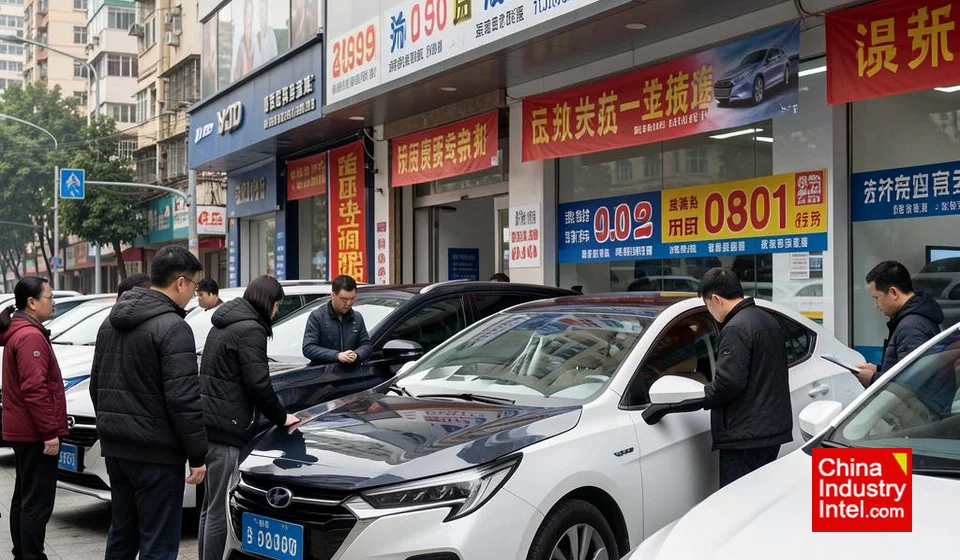
The sales decline is particularly alarming because it occurred during what is traditionally a strong month for auto sales in China. May registrations of new energy vehicles (NEVs) totaled 682,000 units, down from 1.1 million in April — a drop that analysts attribute to consumer deferral as buyers await new models and further price cuts.
Earnings Impact Across Major Players
The financial damage varies significantly by company, reflecting differences in product mix, pricing power, and export exposure. BYD, with its dominant position in the sub-¥200,000 segment, saw the smallest profit decline but the largest absolute revenue drop. NIO, which competes in the premium segment, experienced the steepest margin compression as it matched competitors’ price cuts while maintaining its battery-as-a-service subscription model.
| Company | Q2 2026 Net Profit | YoY Change | Gross Margin | Domestic Sales (May) |
|---|---|---|---|---|
| BYD | ¥6.8B | -15% | 18.2% | 218,000 units |
| Geely (NEV division) | ¥1.2B | -31% | 14.7% | 52,000 units |
| NIO | -¥4.1B (loss) | -62% | 8.3% | 18,200 units |
| Li Auto | ¥2.9B | -22% | 19.1% | 38,400 units |
| XPeng | -¥2.8B (loss) | -45% | 11.6% | 14,800 units |
The five companies collectively employed 412,000 workers at the end of Q1 2026. Industry sources indicate that at least 15,000 positions have been eliminated or frozen since April, primarily in manufacturing and sales functions.
The Price War That Won’t End
China’s EV price war, now in its third year, has fundamentally altered the economics of the industry. Average transaction prices for battery electric vehicles in China fell to ¥168,000 in May 2026, down from ¥212,000 in January 2024. The decline reflects both competitive pressure and falling battery costs — LFP cell prices dropped to ¥0.38 per Wh in Q1 2026, less than half the ¥0.82 per Wh level of two years ago.
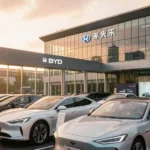
BYD has been the most aggressive price cutter, leveraging its vertical integration (in-house batteries, chips, and motors) to maintain profitability at lower price points. The company’s Seagull model, priced from ¥69,800, has become the best-selling EV in China with 48,000 units sold in May alone. However, the Seagull’s razor-thin margin of approximately 5% contributes little to BYD’s bottom line.
Technology Escalation: The Ultrafast Charging Race
Unable to compete on price alone, China’s EV makers are pivoting to technology differentiation. The new battleground is charging speed — CATL’s Shenxing Plus battery promises a full charge in 6 minutes, while BYD’s Blade 2.0 achieves 80% charge in 10 minutes. Geely has invested ¥12 billion in its own ultrafast charging platform, targeting 5-minute full charges by 2027.
This technology arms race is consuming R&D budgets at an alarming rate. Combined R&D spending by China’s top five EV makers reached ¥48 billion in 2025, up 35% year-over-year. NIO alone spent ¥13.4 billion on R&D — more than its total revenue — as it pursued battery swapping infrastructure and autonomous driving technology simultaneously.
| Technology | Leader | Current Benchmark | 2027 Target |
|---|---|---|---|
| Ultrafast charging | CATL | 6 min (10-80%) | 3 min |
| Battery swapping | NIO | 3 min swap time | 2 min |
| Solid-state batteries | BYD, CATL | Lab prototypes | Pilot production |
| Autonomous driving (L3) | BYD, Huawei | Highway pilot | Urban L3 |
Export Markets Provide a Lifeline
While domestic sales have weakened, exports continue to grow. Chinese NEV exports reached 198,000 units in May 2026, up 67% year-over-year. Europe remains the largest export destination, accounting for 42% of shipments, followed by Southeast Asia (28%) and the Middle East (12%).
BYD’s export strategy has been particularly effective. The company opened its first European factory in Szeged, Hungary, in March 2026, with initial capacity of 150,000 units per year. Local production allows BYD to avoid the EU’s 38.1% tariff on Chinese-made EVs, giving it a significant cost advantage over competitors who must absorb the tariff or build their own European facilities.
CII Analysis
The Q2 2026 earnings shock is a reality check for China’s EV industry, but it does not alter the long-term trajectory. The domestic market is undergoing a painful consolidation that will eliminate 30-40% of the 150+ EV brands currently operating in China by 2028. The survivors — BYD, Li Auto, and possibly Geely — will emerge with stronger market positions and healthier margins.
NIO’s 62% profit decline is the most concerning. The company’s dual investment in battery swapping and autonomous driving is burning cash at ¥4 billion per quarter, and its May sales of 18,200 units represent an annualized run rate of just 218,000 vehicles — insufficient to achieve scale economics. We assign a 40% probability that NIO requires additional capital raising within 12 months. BYD remains our top pick in the sector with a 12-month target of ¥380, reflecting its vertical integration advantage and export-driven growth.
Follow our analysis: LinkedIn