





































China’s Shipping Resilience Underpins Global Supply Chain as Iran War and Tariffs Disrupt Trade
Iran War Disrupts Qatar Helium Supply, Forcing Chipmakers to Rethink Just-in-Time Logistics Models

The global supply chain resilience built over three decades of globalization is facing its most severe test since the COVID-19 pandemic. A confluence of disruptions — the Iran war’s impact on Middle East shipping routes, helium shortages threatening semiconductor production, and escalating U.S.-China trade tensions — is forcing companies to fundamentally redesign how they source, manufacture, and distribute goods worldwide.
Since Iran’s military operations disrupted production in Qatar, which supplies approximately 30% of the world’s helium, chipmakers including TSMC, Samsung, and Intel have scrambled to secure alternative supplies. Helium is essential for cooling during semiconductor manufacturing, and a sustained shortage could slow production of advanced chips used in AI data centers, smartphones, and automotive systems.
The Three Disruptions Hitting Supply Chains Simultaneously

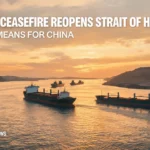
Three concurrent disruptions are testing supply chain resilience across industries. First, the Iran conflict has added 10-14 days to Asia-Europe shipping via the Cape of Good Hope route, consuming vessel capacity and inflating freight rates by 45% since March 2026. Second, the helium shortage threatens semiconductor and MRI manufacturing. Third, U.S. tariffs on Chinese goods have reached 60% on average, forcing companies to accelerate diversification away from Chinese suppliers.
| Disruption | Impact | Affected Industries | Duration Estimate |
|---|---|---|---|
| Iran war / Red Sea | +45% freight rates, +14 days transit | All sectors, especially automotive & electronics | 12-18 months |
| Qatar helium shortage | -30% global helium supply | Semiconductors, medical imaging, aerospace | 6-9 months |
| U.S.-China tariffs (60%) | Increased input costs, supply chain rerouting | Consumer electronics, textiles, machinery | Indefinite |
| Red Sea Houthi attacks | Insurance premiums +300%, vessel delays | Oil, gas, consumer goods | 24+ months |
China’s Shipping Resilience: The Surprising Stability

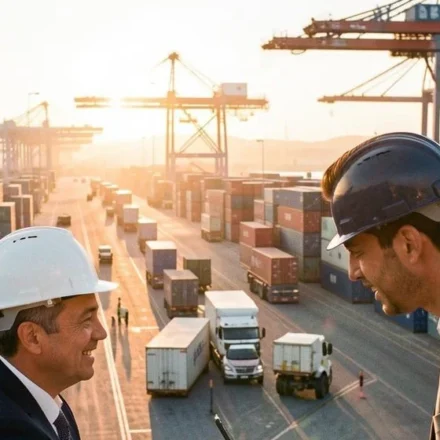
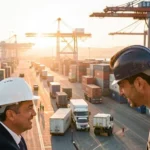
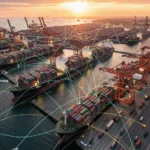
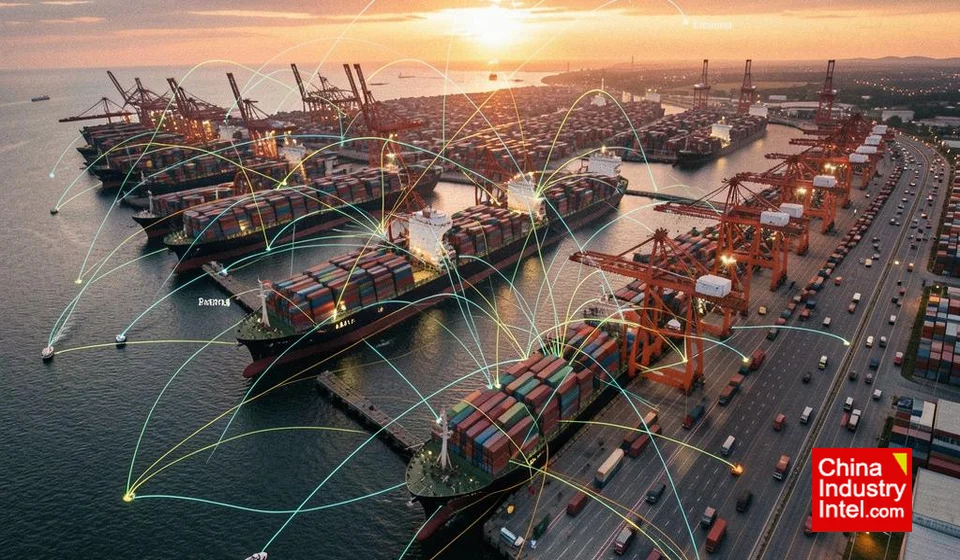
Amid the chaos, China’s shipping infrastructure has emerged as an unexpected pillar of stability. Xinhua reported on June 15, 2026 that China’s port throughput reached 142 million TEU in the first five months of 2026, up 6.8% year-over-year. Shanghai, the world’s busiest container port, handled 47.3 million TEU in 2025 and is on pace for 50 million TEU in 2026.
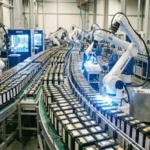
The resilience stems from three factors. First, China’s $120 billion port modernization program has automated 78% of container handling at major ports, reducing dependence on labor. Second, China’s diversified port network — with major facilities in Shanghai, Ningbo-Zhoushan, Shenzhen, Qingdao, and Guangzhou — provides redundancy that single-port nations lack. Third, China’s state-owned shipping lines, particularly COSCO, have absorbed disruption costs that private carriers have passed to customers.
| Port | TEU (Jan-May 2026) | YoY Growth | Automation Level |
|---|---|---|---|
| Shanghai (Yangshan) | 21.8M | +7.2% | 95% |
| Ningbo-Zhoushan | 16.4M | +8.1% | 82% |
| Shenzhen | 13.2M | +5.4% | 88% |
| Qingdao | 11.8M | +6.9% | 76% |
| Guangzhou | 10.1M | +4.8% | 71% |
Companies Accelerate “China Plus One” — But China Remains the “One”
The “China Plus One” strategy — maintaining Chinese supply chains while building alternatives in Vietnam, India, or Mexico — has been corporate America’s stated goal since 2020. However, the 2026 disruptions are revealing how difficult diversification actually is. Vietnam’s ports lack the capacity and efficiency of China’s, India’s infrastructure gaps persist, and Mexico’s nearshoring boom is constrained by labor shortages and security concerns.

A McKinsey survey of 200 global supply chain executives conducted in May 2026 found that 67% have accelerated diversification plans, but only 12% have actually reduced their China sourcing below 50% of total procurement. The primary obstacles: China’s unmatched supplier density, quality consistency, and infrastructure quality.
CII Analysis
The simultaneous supply chain disruptions of 2026 are not a temporary crisis but a preview of the “polycrisis” era in global logistics. Companies that treated supply chain resilience as a cost center will pay the price; those that invested in redundancy, diversification, and digital visibility will emerge stronger. China’s shipping infrastructure resilience is a double-edged sword — it stabilizes global trade today but reinforces the dependency that Western governments are trying to reduce.
For investors, the disruption environment favors logistics technology companies (project44, FourKites), port automation specialists (ZPMC, Shanghai Zhenhua), and diversified shipping lines (COSCO, Maersk). We see a 75% probability that global freight rates remain elevated above 2023 levels through 2027, creating a sustained tailwind for Chinese port operators and shipping companies.
Follow our analysis: LinkedIn